
Our services
Professional Leather Colour Repair
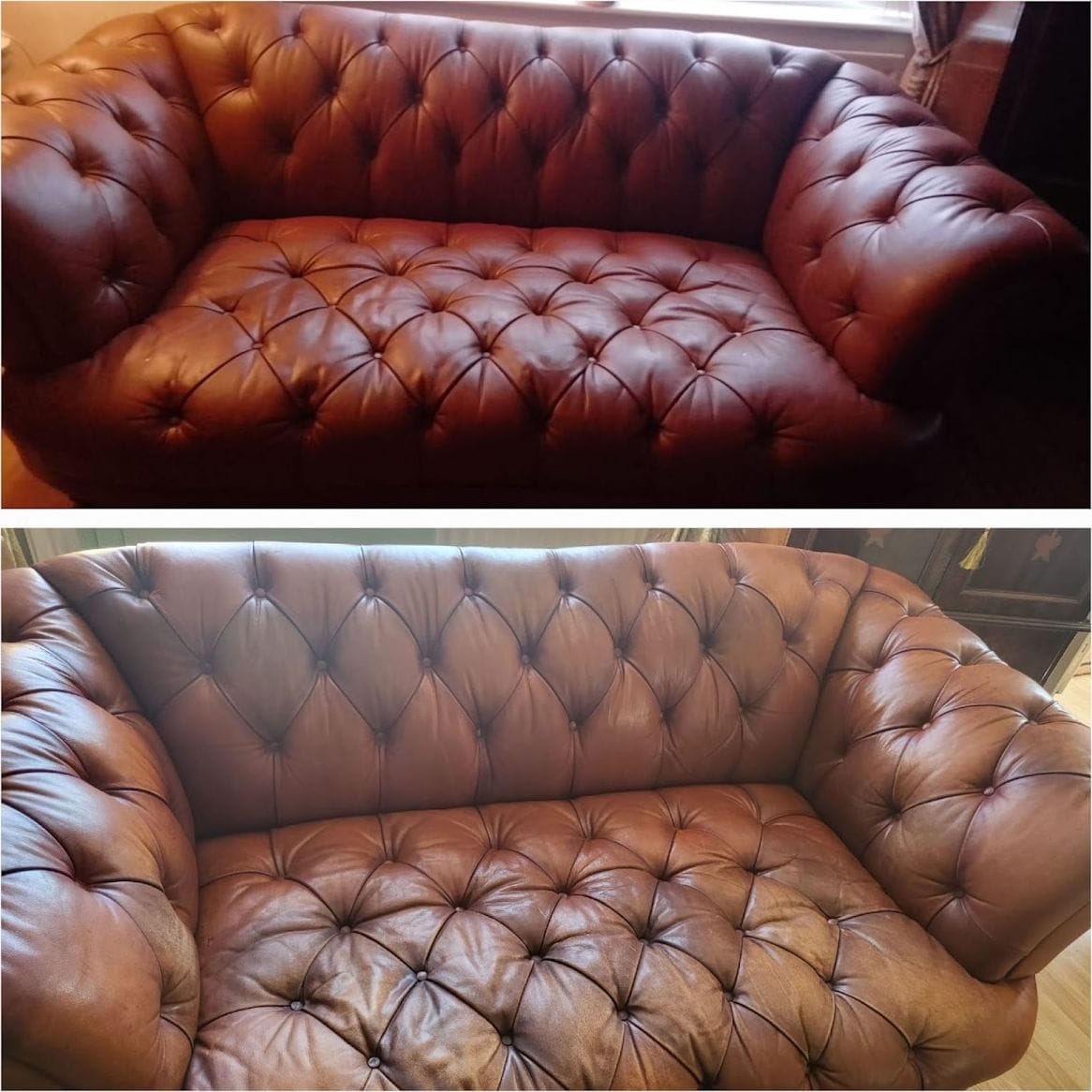
Leather colour repair puts the colour and finish back onto leather that has faded, worn thin or gone patchy. It is the most common repair we carry out, and on most modern furniture it is also the most effective — because the damage people notice first is almost always in the finish rather than in the hide underneath.
Most furniture leather is pigmented: the hide carries a coloured coating sealed with a clear topcoat. Sunlight, body contact, perspiration and cleaning wear that coating away over time. Once it thins, the colour beneath shows through unevenly and the surface starts to look tired, blotchy and dull. Recolouring rebuilds that layer.
We work across Durham, Tyne and Wear and Teesside, on sofas, armchairs, dining chairs, recliners and leather car interiors.
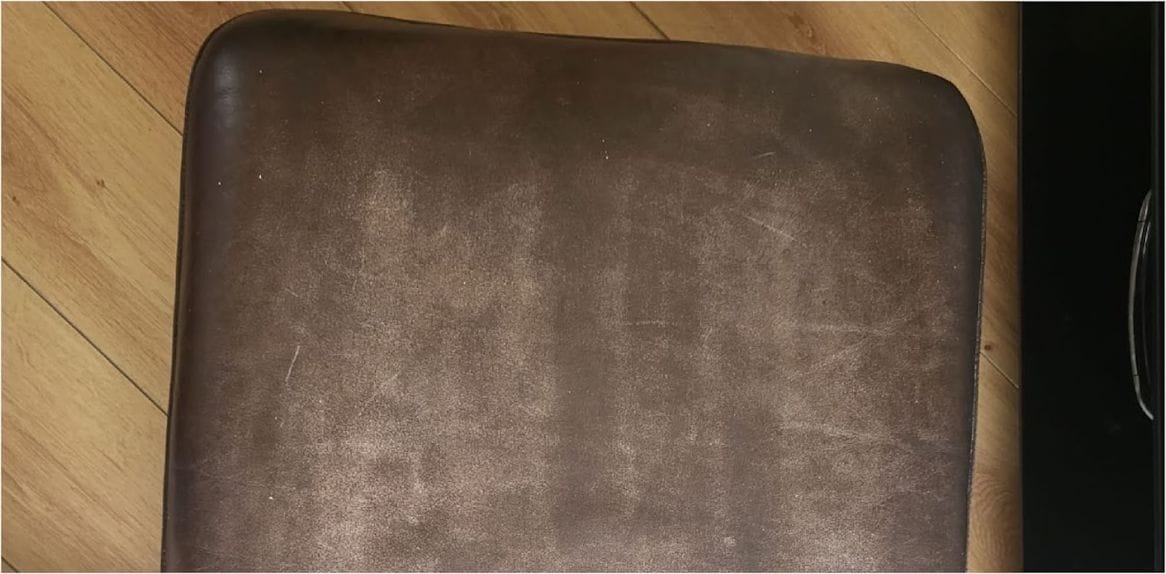 Before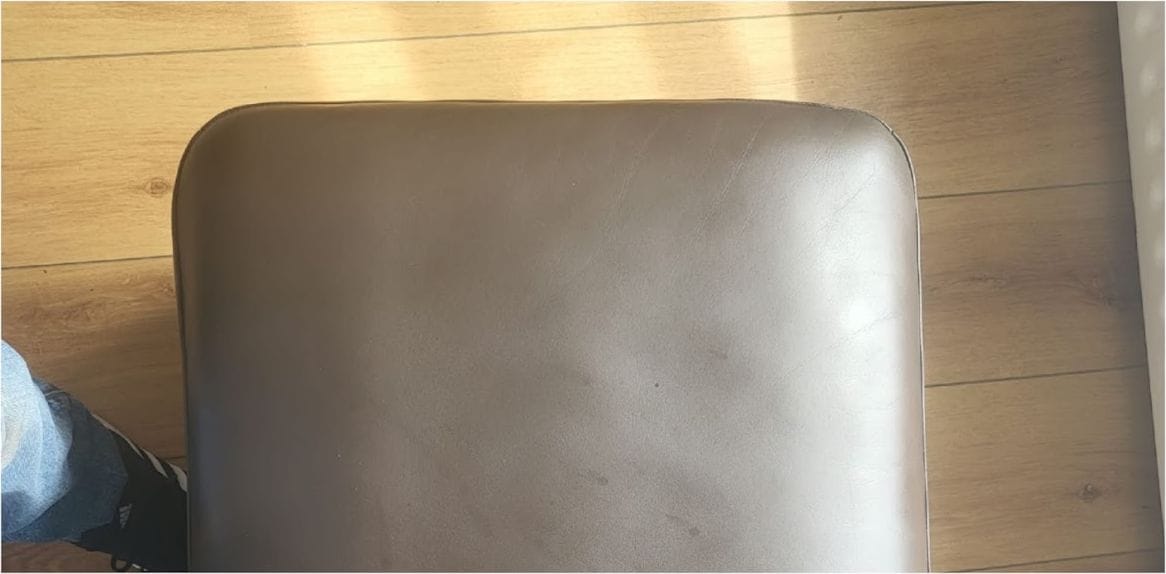
Leather chair seat pad with faded, patchy colour worn through the centre
What we repair
Colour problems we repair
If what has gone wrong with yours is not listed here, send a photo — it is usually a variation on one of these.
Faded leather
Colour lightened by daylight and UV, usually worst on the side of the piece nearest a window. Fading is rarely even, which is what makes it so noticeable — one arm or one end ends up visibly paler than the rest.
Worn and thinning colour
The front edge of a seat, the tops of arms and the headrest area take the most contact and lose their finish first. The leather often looks shiny and pale in those places while the rest of the piece still looks fine.
Patchy or uneven colouring
Blotching caused by uneven wear, spills, or previous attempts at cleaning and reconditioning with the wrong product. Colour repair evens the whole panel rather than spot-treating the worst areas.
Scuffs affecting colour
Marks where something has caught the surface and taken the finish off without cutting into the hide. These usually recolour well because the leather itself is undamaged.
Colour loss around seams and buttons
Piping, stitch lines and buttoned areas flex constantly and rub against themselves, so the finish wears off along the edges long before the flat panels go.
Dye transfer and staining
Denim and other dark fabrics transfer dye into pale leather, especially on cream and light grey. Whether this lifts out or needs recolouring depends on how deeply it has gone in.
The repair
How leather colour repair works
Assessment and colour match
First we establish what the leather actually is and how it was originally finished, because pigmented, semi-aniline and aniline leathers all behave differently. The colour is then matched against an unworn part of the piece — usually a side panel or the underside of a cushion, where the original shade has been protected.
Cleaning and preparation
The surface is cleaned to remove body oils, old dressings and any silicone-based products that would stop the new colour keying properly. This step does most of the work in deciding whether a recolour lasts.
Repairing the surface first
Any cracking, scuffing or filling work is dealt with before colour goes on. Colour applied over an unrepaired surface simply follows the damage and highlights it.
Applying the colour
The matched colour is built up in thin coats rather than one heavy one. Thin layers keep the leather flexible and preserve the grain — a thick coat looks painted and cracks along the flex lines within months.
Sealing and finishing
A protective topcoat is applied to seal the colour and set the sheen level, matched to the original so a repaired panel does not sit brighter or duller than the leather beside it.
Repair or replace
Why recolour instead of replacing
When leather fades or loses its finish, the structure of the piece is almost always untouched. The frame is sound, the springs are working and the cushions are the right shape — what has gone is a coating a fraction of a millimetre thick. Replacing an entire suite because of that is an expensive answer to a surface problem.
Recolouring also keeps furniture that fits. A sofa bought for a particular room, in a particular colour, that got in through a particular doorway, is worth more than its resale value suggests. Colour repair works with what is already there.
It is the greener option too. A three-piece suite is a large, awkward object to dispose of, and very little of it gets recycled.
When a repair is not the answer
Colour repair is not right for everything. Where the hide itself has perished, gone brittle or split across a wide area, adding colour will not restore strength and the repair will not last. Very soft aniline leathers, which have no pigment coating by design, take colour differently and cannot always be brought back to an even finish. We would rather tell you that from your photographs than take the work on and disappoint you.
Our work
Repairs we have carried out
Switch between before and after to see the difference on each job.
BeforeLeather chair seat pad with faded, patchy colour worn through the centre
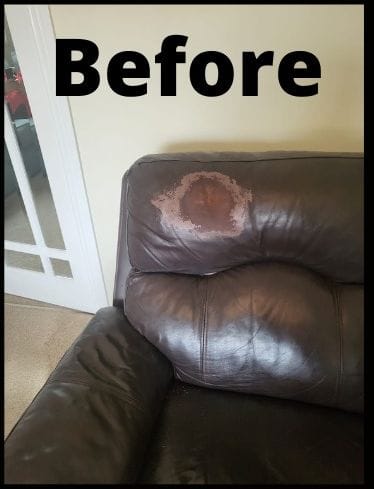 Before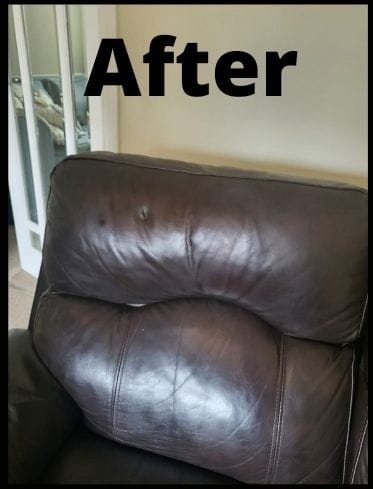
Brown leather sofa back with a circular burn mark exposing the layer beneath
Next step
How to get a quote for leather colour repair
Photographs are what let us quote accurately without arranging a visit first. Send them with a sentence about what has gone wrong and we will come back to you.
- A close-up of the worst-affected area
- One photo of the whole piece for context
- Taken in daylight rather than under a lamp
- Your postcode, so we can confirm we cover you
Questions
Professional Leather Colour Repair — your questions answered
Can faded leather colour really be restored?
In most cases yes. Where the fading is in the pigment and topcoat rather than the hide, recolouring rebuilds that layer and brings the piece back to an even shade. How close the finish gets to original depends on the leather type and how far the wear has gone.
Will the repaired colour match the rest of my sofa?
Colour is matched against an unworn area of the same piece, which is the most reliable reference there is. On a piece that has faded unevenly we normally recolour whole panels rather than patches, because a panel edge is a natural place for a slight variation to sit.
Will the new colour rub off on my clothes?
Not once it is properly sealed and cured. Colour transfer usually comes from work done without cleaning the leather first, or without a topcoat — which is why preparation matters as much as the colour itself.
Can you change the colour of my leather sofa completely?
Going darker is generally achievable. Going significantly lighter is much harder and often not advisable, because it needs heavy coverage that stiffens the leather. Send photographs and tell us the shade you have in mind and we will give you an honest answer.
How do I get a quote for leather colour repair?
Send photographs of the faded or worn areas, ideally taken in daylight and including one shot of the whole piece for context. We will come back to you with a quote and tell you what result to expect.
More on our frequently asked questions page.
Free quote
Get a price for leather colour repair
Use the calculator for a guide price, then send photos of the damage for an accurate quote. Both take a couple of minutes and neither commits you to anything.
1. Estimated price
Choose the item, the repair and the number of seats, then calculate to see an estimated guide price.
- · Quotations are free and carry no obligation
- · Most repairs are carried out in your home
- · Photos give you an accurate price, not an estimate
Calculator results are an estimated guide only. A final quotation depends on the actual damage, the type and condition of the leather, and may require photos or further assessment.
2. Request your free quote
Related
Other repairs we carry out
Where we work
Where we carry out leather colour repair
We cover County Durham, Tyne and Wear and Teesside from our base at South Hetton. Choose your area for local details.
Ready to sort your leather colour repair?
Send us a few photos of the damage and we will come back to you with a free quotation and an honest view of the result you can expect.