
Our services
Professional Leather Restoration Services
Leather restoration covers the repairs that go beyond colour alone — cracking, splits, burns, scuffs that have cut into the surface, and the general drying and hardening that comes with age. The aim is to stabilise the damage, rebuild the surface and then bring the colour back so the repair sits in with everything around it.
Almost all of this work is done in your home. A restoration usually combines several repairs on the same piece: a burn on one cushion, cracking across the seat, worn colour on the arms. They are dealt with in sequence, and the piece is recoloured as a whole so the finish reads as one.
We restore leather furniture across Durham, Tyne and Wear and Teesside, from single armchairs to full suites, along with leather car interiors.
 Before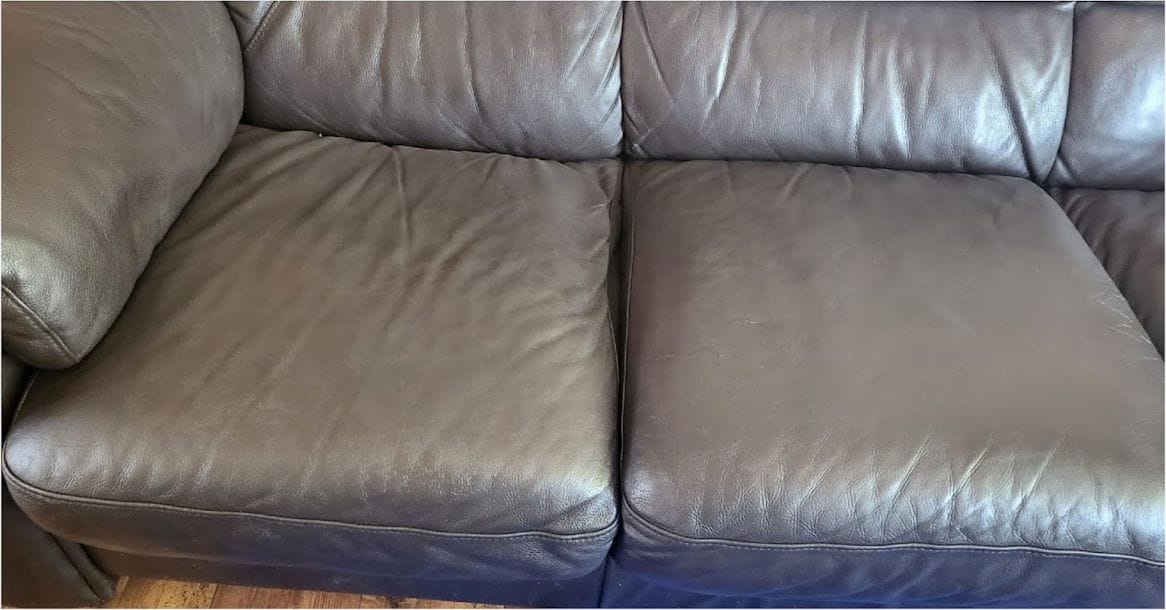
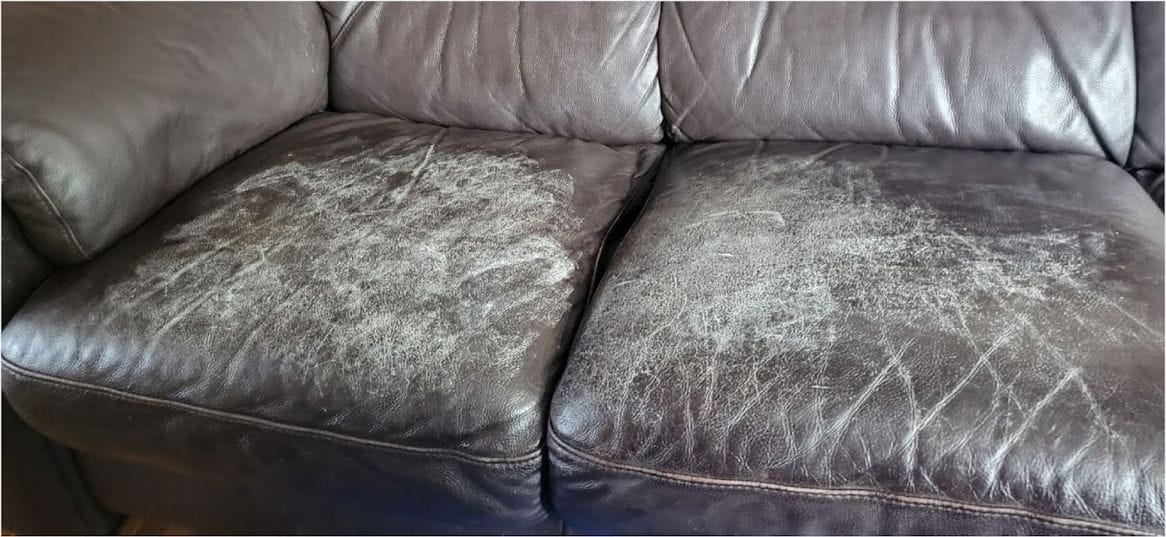
Brown leather sofa cushions covered in cracked, flaking finish before repair
What we repair
Damage we restore
If what has gone wrong with yours is not listed here, send a photo — it is usually a variation on one of these.
Cracked and crazed leather
Fine cracking across a seat panel is usually the finish drying and breaking up rather than the hide failing. Caught at that stage it fills and recolours well. Deeper cracks that have gone into the leather need the surface rebuilding before any colour goes on.
Splits along seams and edges
The front edge of a seat cushion and the fold where a seat meets a back take constant flexing, and that is where leather gives way first. Small splits can be backed and filled; a split that has run the length of a seam is a bigger job.
Burns and scorch marks
Cigarette burns and heat damage leave a hard, discoloured crater. The damaged material is cleared away, the void filled and levelled, and the area colour-matched into the surrounding hide.
Scuffs, gouges and pet damage
Claw marks and knocks that have taken material out of the surface. These fill and recolour well provided the hide has not been perforated.
Dry, hard and tired leather
Leather that has lost its suppleness feels stiff and looks dull, and it cracks more readily because it no longer flexes. Restoration includes feeding and reconditioning the hide before any surface work.
General ageing and wear
The accumulated effect of years of use — thinning colour, softened edges, shine where the finish has polished away. Restored as a whole rather than patched piece by piece.
The repair
How a leather restoration works
Assessing what has actually failed
The important question is whether the damage is in the finish or in the hide. Finish damage is straightforward. Hide damage — perished, brittle or split-through leather — is a different repair with a different outcome, and it is worth being clear about which one you have before any work starts.
Cleaning and reconditioning
The leather is cleaned of body oils and old dressings, then fed where it has dried out. Restoring some flexibility first means the repairs that follow flex with the leather instead of cracking away from it.
Rebuilding the damaged surface
Cracks, burns and gouges are filled and levelled in thin layers, each allowed to cure before the next. Grain texture is worked back into the filled area so it does not read as a flat patch against the leather around it.
Recolouring
Colour is matched to an unworn part of the piece and built up in light coats across whole panels, so the repair blends rather than sitting as a spot of fresh colour.
Sealing
A topcoat seals the work and sets the sheen to match the original finish, and gives the repair some protection against the wear that caused the problem in the first place.
Repair or replace
Why restore rather than replace
Furniture built around a solid frame is worth keeping. Frames, springs and cushion interiors routinely outlast the leather covering them, and when a suite is written off it is usually the surface that has failed, not the structure.
Restoration is also the practical answer where furniture is difficult to move. Large corner suites, upper-floor flats and narrow hallways all make replacement more disruptive and expensive than the price tag suggests.
And a repair keeps a piece that suits the room. Matching an existing colour scheme, or replacing one item from a suite that is no longer sold, is often impossible — restoring what is there sidesteps the problem entirely.
When a repair is not the answer
Restoration has limits and it is better to know them up front. Leather that has perished across a wide area, gone powdery, or torn along multiple seams may be past the point where a surface repair will hold. Bonded leather — a backing sheet with a thin leather-look coating, common on cheaper furniture — cannot be restored in the same way, because once the coating delaminates there is no hide underneath to repair. Clear photographs let us tell you which of these you are dealing with before you spend anything.
Our work
Repairs we have carried out
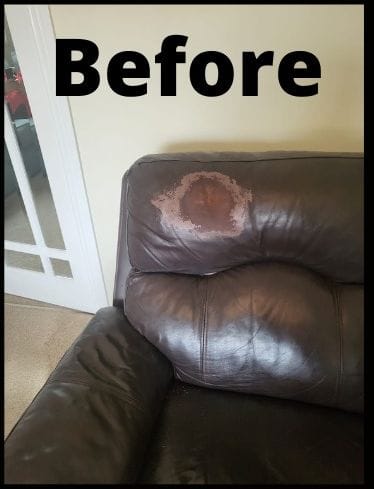
Switch between before and after to see the difference on each job.
BeforeBrown leather sofa cushions covered in cracked, flaking finish before repair
 Before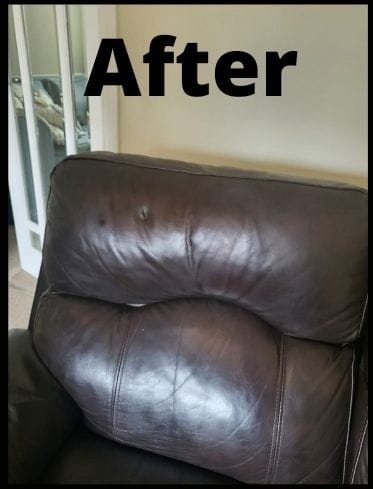
Brown leather sofa back with a circular burn mark exposing the layer beneath
 Before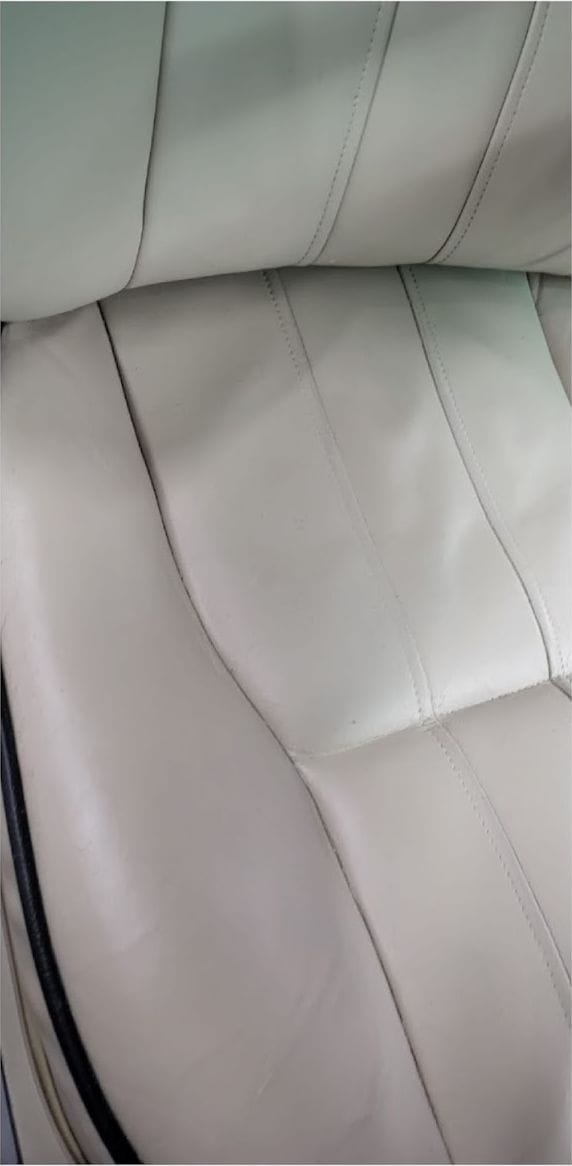
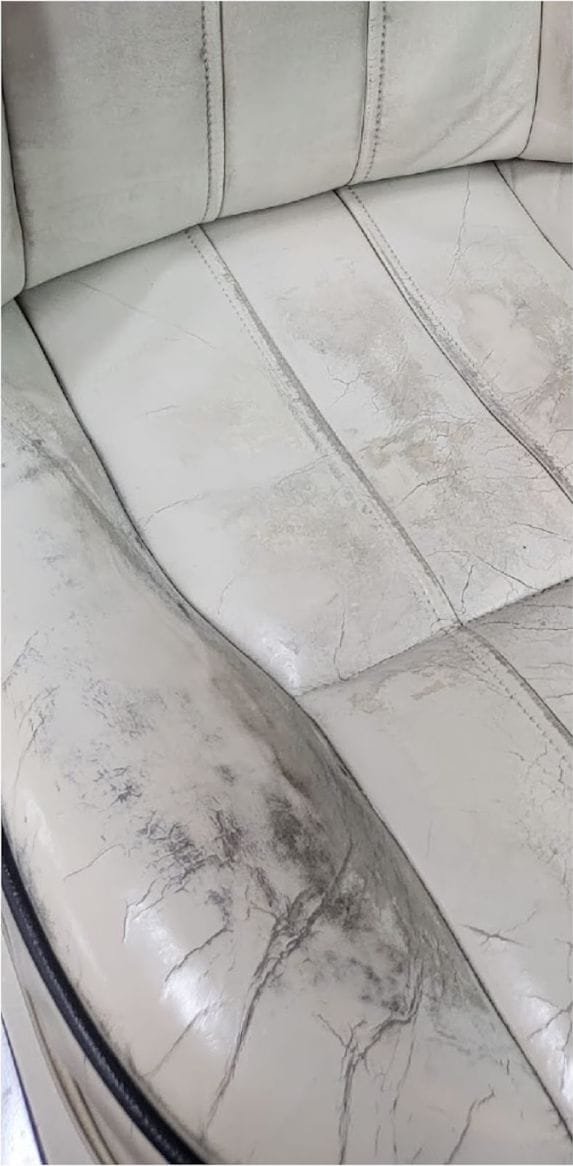
Cream leather seat with grey soiling and fine cracking across the cushion before restoration
Next step
How to get a quote for leather restoration
Photographs are what let us quote accurately without arranging a visit first. Send them with a sentence about what has gone wrong and we will come back to you.
- A close-up of the worst-affected area
- One photo of the whole piece for context
- Taken in daylight rather than under a lamp
- Your postcode, so we can confirm we cover you
Questions
Professional Leather Restoration Services — your questions answered
Can cracked leather be repaired?
Usually, yes — it depends on how deep the cracking has gone. Cracking in the surface finish fills and recolours well. Where the cracks have gone through the hide and the leather has become brittle, a surface repair will not restore strength, and we will say so.
Can you repair a leather burn?
Yes. The damaged material is removed, the void filled and levelled, grain texture worked back in, and the area colour-matched to the leather around it. Burns on a flat panel repair more cleanly than burns on a seam or a sharp edge.
Is it better to repair or replace damaged leather?
If the frame is sound and the damage is to the surface, repair is almost always the better value. If the hide has perished across the whole piece, replacement may make more sense. We will tell you which applies to yours rather than quoting for work that will not hold.
How long does a leather restoration take?
It depends entirely on the piece and how many repairs it needs, and each filling and colour stage has to cure before the next. We give you a realistic timescale with the quote once we have seen photographs — we would rather not guess before that.
Will the repair be invisible?
The aim is a repair you do not notice in normal use. On a flat panel with a good colour match, results can be very close to seamless. On a heavily textured hide, or right on a seam, a repair may still be findable if you go looking for it. We will tell you honestly what to expect.
More on our frequently asked questions page.
Free quote
Get a price for leather restoration
Use the calculator for a guide price, then send photos of the damage for an accurate quote. Both take a couple of minutes and neither commits you to anything.
1. Estimated price
Choose the item, the repair and the number of seats, then calculate to see an estimated guide price.
- · Quotations are free and carry no obligation
- · Most repairs are carried out in your home
- · Photos give you an accurate price, not an estimate
Calculator results are an estimated guide only. A final quotation depends on the actual damage, the type and condition of the leather, and may require photos or further assessment.
2. Request your free quote
Related
Other repairs we carry out
Where we work
Where we carry out leather restoration
We cover County Durham, Tyne and Wear and Teesside from our base at South Hetton. Choose your area for local details.
Ready to sort your leather restoration?
Send us a few photos of the damage and we will come back to you with a free quotation and an honest view of the result you can expect.